
Waiting on Death: When Transition Becomes Sacred Accompaniment
The Long Arc of Transition
Death doesn’t arrive as a thief in the night, not always. Sometimes it sends messengers months, even years ahead—a slowing gait, a dimming appetite, slow withdrawal, the way someone begins to speak more often of those already gone. My mother’s transition, I now understand, began long before hospice knocked on our door. It started in the subtle shifts, the gradual releasing of earthly tethers that those who love deeply learn to recognize.
Five days have passed since she crossed over. Having helped other family members transition before her, each teaching me that death is not a moment but a journey, and those of us who witness it become inadvertent guides, learning the landscape through repetition and reverence.
The Rituals That Hold Us
In Jamaican tradition, death is met with both solemnity and celebration, grief and gratitude woven together like the plaits in my grandmother’s hair. We don’t simply wait for death—we prepare the space for it, both physically and spiritually.
The white rum placed at the doorway to cleanse the path between worlds. The singing that rises not from hymnals but from ancestral memory, voices finding harmonies passed down through generations. The washing of the body with particular herbs—cerasee for purification, mint for peaceful passage. These aren’t just customs; they’re a technology of transition, tools for both the dying and those who keep vigil.
We have the windows open. “Let the duppy dem know where to find me,” using our word for spirits. In those final days, we would burn frankincense and myrrh, the smoke carrying our prayers and her spirit’s preparation upward.
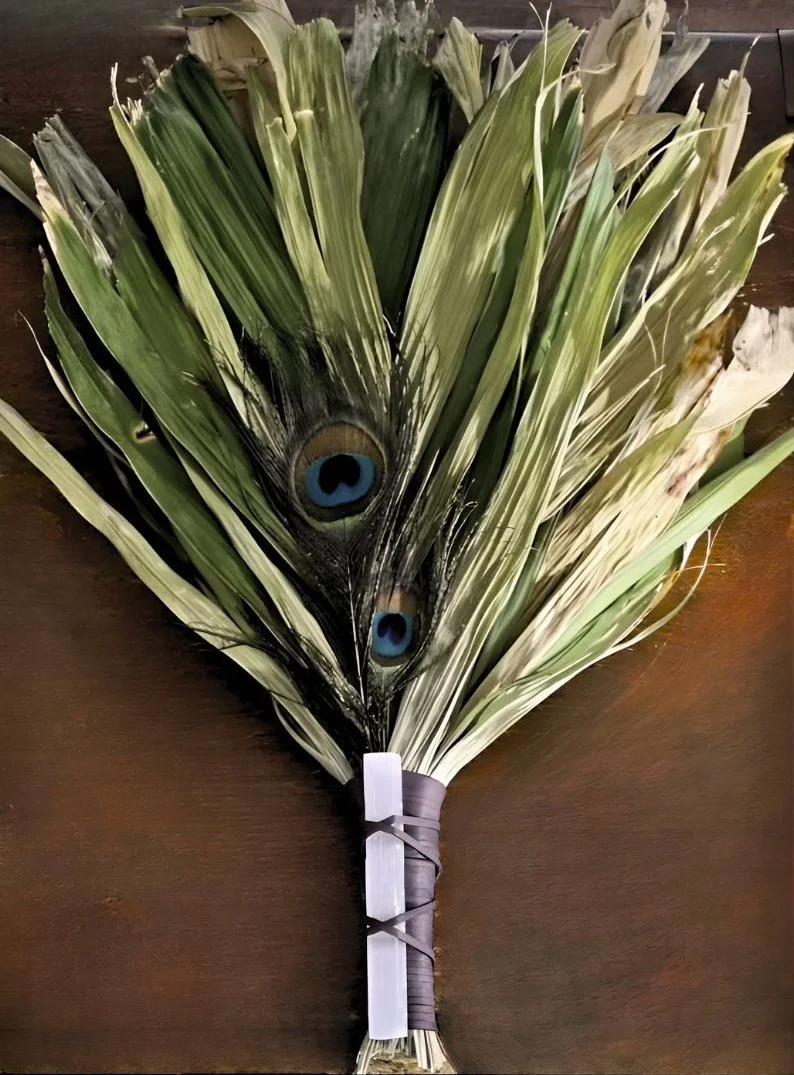
In a USA setting – no open windows but I used my energy tools and wisdom to purify and clear space for Mummy. My chakapa /ceremonial leaf shaker cleared the space, oils of frankincense, peppermint, lavender and RutaVaLa. We rubbed her skin and feet with coconut lotion infused with ginger, keeping circulation flowing, yes, but also anointing her for the journey ahead. Yuh done know Wray & Nephew whites was donned on Miss Yvonne daily…the nurses would ask – is she drinking that? No …stay calm, is a Caribbean ting, we smell it and rub it pon we mole.
I brought in my sound healing – gonged, chimed; shared reiki, light language, prayers, played music and always had high frequency binaural sounds in the background for her journey to calm, healing, comfort and peace. One nurse said –‘I love when you come and do your energy stuff, the room feels so much better and I do too’…
My #1 priority was Mummy’s peace - all the way! Mission Accomplished and proud.
The Architecture of Hospice
The American hospice system, for all its clinical efficiency, often struggles to hold the fullness of cultural death practices. The nurses who came—skilled, compassionate—sometimes paused at my rituals, uncertain how to navigate the intersection of medical protocol and spiritual practice.
But this is where the death doula emerges as bridge-builder. Someone who can translate between the language of morphine dosages and the grammar of grief rituals. Who understands that pain management includes not just the body but the soul’s anguish at separation. Who can advocate for a family’s need to sing through the night when policy might prefer quiet.
Hospice provides the framework, but families need someone who can help them paint their own sacred picture within those lines. Someone who knows that waiting on death is active, not passive—a practice requiring stamina, wisdom, and deep presence.
This was the journey with Mummy – understanding intuitively she was journey and desiring hand holding which the bedside villagers held down with love, honor, dignity and respect.
I advocated for her fiercely – her comfort, her meds, her treatment, the nurses that were NOT welcome back because they lacked compassion or expertise or basic professionalism. Don’t play with me when it comes to care! You will hear me roar.
The Gathering of the Soul Tribe
Death has a way of revealing who your people truly are. Not everyone can hold space for the dying. Some flee from the discomfort, the rawness, the confrontation with mortality. But others draw closer, forming what I’ve come to call the soul tribe (the bedside villagers of 3 for Mummy)—those beings who understand that accompanying death is a privilege, not a burden.
Our soul tribe materialized like ancestors made flesh. The friend who appeared daily with soup no one asked for but everyone needed. The cousin who knew intuitively when to indicate vigil shifts. The neighbor who simply sat, asking nothing, offering presence as prayer.
This organic gathering taught me that death doula work isn’t solitary. It’s about recognizing and orchestrating the soul tribe, helping each person find their role in the sacred choreography of transition. Some are hand-holders. Some are song-leaders. Some are the ones who remember to eat, to laugh, to open windows when the room grows too heavy with goodbye.
The Vigil: Practicing Presence
Waiting on death is perhaps the most active waiting there is. Every breath becomes a question. Every pause between breaths, an eternity. We learned to read the signs—the particular restlessness that precedes release, the way breathing changes pitch and rhythm, the cooling of extremities that signals the soul’s gathering inward.
But beyond the physical markers, there’s an energetic shift that those who’ve kept multiple vigils begin to recognize. The room changes quality. Time becomes elastic. The dying sometimes speak to people we cannot see, reaching for hands that exist beyond our vision. My mother reached a lot; I knew who was there and told her it was ok to go and take their hand. When she spoke words that didn’t make sense to us - we didn’t correct her. We understood she was being collected by her own soul tribe, those who would midwife her from this side to the next.
In those liminal hours, I found myself naturally doing what I now recognize as death doula work—creating sacred space, managing the energy of the room, helping family members process their anticipatory grief while maintaining the peaceful atmosphere the dying need. Translating my mother’s non-verbal communications. Knowing when to call others close and when to give her solitude with the infinite.
The Calling Emerges
Each death I’ve attended or shared with family/friends going through it, has been a teaching. Death could be fierce and fighting. It can be about surrender, how grace looks when someone truly let’s go. It can reveal that confusion and clarity can coexist in the dying process, that consciousness operates on multiple levels as we transition.
And my mother—my mother taught me that death is birth in reverse, requiring the same patience, the same faith in the body’s ancient knowing, the same willingness to surrender to forces beyond our control.
The death doula calling isn’t chosen; it chooses you through experience, through your capacity to remain present when others might flee. It finds you in your ability to hold both grief and gratitude, to facilitate ritual while navigating medical realities, to be comfortable in the uncomfortable space between breath and breathlessness.
Integration: Where Culture Meets Calling
As I contemplate this pivot toward death doula work, I see how my Jamaican heritage has unknowingly prepared me. We don’t sanitize death or hide it away. Children attend nine-nights (our extended wake tradition). We tell stories of the dead as if they’re simply in the next room. We understand that grief needs expression—wailing is welcomed, silence is sacred, and laughter, when it comes, is not disrespectful but necessary.
A death doula who understands cultural diversity, who can hold space for the full spectrum of death practices, is desperately needed in our increasingly multicultural society. Someone who can advocate for the Filipino family’s need to keep vigil en masse, the Mexican family’s desire to create an altar, the Jamaican family’s requirement for specific rituals that might seem foreign to Western medical staff.
The Sacred Economics of Death Work
There’s a hesitation many feel about making death work a career—as if earning a living from this sacred service somehow diminishes it. But I’ve learned that sustainable service requires support. The emotional labor of holding space for death, the physical exhaustion of vigils, the spiritual weight of facilitating transition—this is work that deserves recognition and compensation.
Moreover, professionalizing this calling means more families have access to supported death experiences. Not everyone has a community versed in death attendance. Not every family knows how to create ritual or manage the complex emotions that arise. A trained death doula becomes a resource, a guide, a holder of wisdom that our death-phobic culture has largely forgotten.
The Movement Forward
My mother’s transition is complete, but the work she’s called me toward is just beginning. The three family members I’ve helped cross over were my apprenticeship. The Jamaican, energetic & spiritual rituals I carry are my tools. The soul tribe that gathered for each death showed me the importance of community in transition work.
Becoming a death doula feels less like a career pivot and more like accepting a calling that’s been revealing itself through loss and love. It’s understanding that waiting on death is not passive but deeply active—requiring skills that can be learned, wisdom that can be shared, and presence that can be cultivated.
In Jamaican tradition, we say the dead are not gone but transformed, becoming ancestors who guide the living. Perhaps this is my mother’s final gift—transforming my grief into service, my experience into expertise, my cultural inheritance into a bridge for others walking the sacred path between worlds.
A Living Practice
Death doula work is ultimately about life—about making space for death so that our living becomes more intentional, more connected, more truthful about the temporary nature of our physical existence. It’s about reclaiming death from the sterile confines of medical institutions and returning it to the realm of the sacred, the communal, the deeply human.
As I sit with the freshness of loss and the stirring of purpose, I understand that this work chooses those who’ve been hollowed out by grief and filled back up with understanding. We who have waited on death, who have held the hands of the dying, who have learned the rituals that ease transition—we carry medicine our world desperately needs.
The journey from personal loss to professional calling is its own transition, requiring its own rituals of preparation and commitment. But like all transitions, it’s not one we make alone. The ancestors guide, the community supports, and death itself becomes the teacher, showing us how to serve the living by honoring the dying.
Mummy - fly high my beautiful girl! Love you eternally.
If you're navigating death and need support, let's talk.
You can book a free discovery call, or book a Soulbliss Transitions Consultation directly.
Calls usually available within 24 hours.